Killeen & Fort Hood Buyer Guide
Mortgage Rate Buydown: How to Get a Lower Rate in Today's Market
Points, origination fees, and temporary buydowns explained in plain English — plus how Killeen and Fort Hood buyers are using seller and builder money to cut their payment right now.
6.66%
30-Yr Fixed Avg, Aug 2026
1 Point
Equals 1% Of Loan Amount
2-1
Most Common Temp Buydown
4%
VA Seller Concession Cap
A mortgage rate buydown is the single most practical tool a Central Texas buyer has right now — and most people walk into a lender's office without knowing it exists.
If you are shopping for a home in Killeen, Harker Heights, Copperas Cove, or anywhere around Fort Hood, you have probably noticed that the sticker rate on the news is not the only rate available to you. A mortgage rate buydown lets you (or the seller, or the builder) pay money up front in exchange for a lower interest rate — either for the first couple of years or for the entire life of the loan. Done right, it can shave hundreds of dollars off your monthly payment. Done blindly, it can cost you thousands you never recover.
Freddie Mac's Primary Mortgage Market Survey put the 30-year fixed average at 6.66% in late August 2026, with the 15-year averaging 5.98%. Rates have been drifting sideways for months, which is exactly the environment where a mortgage rate buydown earns its keep: sellers and builders are motivated, inventory has loosened, and concession dollars are on the table for buyers who know to ask.
This guide walks through what a mortgage rate buydown actually is, how discount points and origination fees differ, how to run the break-even math yourself, and the other levers that lower your rate in today's market. Then scroll down for our current active listings around Fort Hood.

What Is a Mortgage Rate Buydown?
A mortgage rate buydown is a prepayment of interest. You hand the lender a lump sum at closing, and in return the lender charges you a lower interest rate. That is the whole idea. The lender is not doing you a favor — they are collecting interest earlier instead of later, and pricing it accordingly.
There are two flavors, and confusing them is the most common mistake buyers make:
Temporary Buydown
Lowers your rate for the first one, two, or three years only, then the loan snaps back to the full note rate. The money sits in an escrow account and is released monthly to cover the difference. A 2-1 buydown is the most common version.
Permanent Buydown
You buy discount points at closing and the rate is lower for all 360 months. There is no snap-back. This is the version that shows up on your Loan Estimate as "Points" in Section A.
Both are legitimate. Which one is right depends almost entirely on how long you plan to keep the loan — and around Fort Hood, that answer is often shorter than people admit, because PCS orders do not care about your amortization schedule.
How a 2-1 Mortgage Rate Buydown Works in Killeen
In a 2-1 mortgage rate buydown, your rate is 2 percentage points below the note rate in year one, 1 point below in year two, and at the full note rate from year three forward. Here is what that looks like on a $300,000 loan at the current 6.66% average:
| Loan Year | Effective Rate | Principal & Interest | Monthly Savings | Annual Savings |
|---|---|---|---|---|
| Year 1 | 4.66% | $1,549 | $379 | $4,550 |
| Year 2 | 5.66% | $1,734 | $194 | $2,331 |
| Year 3 and after | 6.66% | $1,928 | $0 | $0 |
The total cost of that mortgage rate buydown is roughly $6,881 — about 2.3% of the loan amount — and it is funded up front into escrow. The critical detail: you should rarely be the one paying for it. Temporary mortgage rate buydown funds are overwhelmingly seller-paid or builder-paid concessions. If a builder in the Killeen area is advertising a "3.99% rate," a temporary mortgage rate buydown is usually what is behind the banner.

Two details nobody tells you. First, you must qualify at the full note rate (6.66% in the example above), not the teaser rate — so a temporary mortgage rate buydown does not help you borrow more. Second, if you refinance or sell before the mortgage rate buydown period ends, the unused escrow balance is typically credited back toward your loan payoff. That money is not lost.
3-2-1 and 1-0 buydowns
A 3-2-1 mortgage rate buydown starts three points below the note rate and steps down over three years — more savings, higher cost, and tougher to get funded. A 1-0 mortgage rate buydown drops the rate one point for a single year and is the cheapest way to sweeten a deal when a seller only has a little room. Ask your Homevets agent which structure the specific seller is most likely to accept.
Understanding Discount Points: The Permanent Mortgage Rate Buydown
Discount points are prepaid interest that permanently lowers your rate. One point equals 1% of the loan amount. On a $300,000 loan, one point is $3,000. As a rough rule of thumb, one point buys roughly 0.25% off the rate, though the real number floats with the market and can land anywhere between about 0.125% and 0.375% on any given day.
| Points Purchased | Cost At Closing | Rate | Monthly P&I | Monthly Savings | Break-Even |
|---|---|---|---|---|---|
| 0 points | $0 | 6.66% | $1,928 | — | — |
| 1 point | $3,000 | 6.41% | $1,878 | $49 | 61 months |
| 2 points | $6,000 | 6.16% | $1,830 | $98 | 61 months |
The break-even is the only number that matters: cost divided by monthly savings. At roughly 61 months, you need to keep this loan a little over five years just to get your money back. That is a fine trade for a family planting roots in Harker Heights. It is a poor trade for a soldier who expects orders in three years, and it is a terrible trade if rates fall far enough that you refinance in eighteen months.
"Points are a bet that you will still own this loan five years from now. Around Fort Hood, that is a bet worth thinking hard about before you place it."
Homevets RealtyOrigination Fees vs. Discount Points
This is where buyers get taken. Both charges appear in Section A of page 2 of your Loan Estimate, both are quoted as a percentage of the loan, and they look nearly identical on paper. They are not the same thing at all.
| Discount Points | Origination Fee | |
|---|---|---|
| What it buys you | A lower interest rate | Nothing — it is the lender's charge for processing the loan |
| Typical cost | 1% of the loan per point, optional | Roughly 0.5% to 1% of the loan |
| Optional? | Yes, always | Often not, but the amount is negotiable |
| Shows up as | "__ % of Loan Amount (Points)" | "Origination charge," "underwriting," "processing," "application" |
| Usually tax deductible | Yes, if paid to lower the rate | Only in limited cases — ask your CPA |
| Can seller pay it? | Yes, within concession limits | Yes, within concession limits |
A lender quoting you "6.25%" while burying two discount points and a 1% origination fee in Section A is not actually cheaper than a lender quoting 6.66% with no points and a $995 flat fee. Compare the APR and compare Section A line by line across every Loan Estimate you collect. If a fee has a vague name and no explanation, ask what it buys. On a VA loan, note that the lender's flat fee cannot exceed 1% of the loan amount — and the VA funding fee is a separate government charge, not an origination fee.
Zero-point does not mean zero-cost. Every rate on a lender's sheet is priced. A "no points, no fees" loan simply moves the cost into a higher rate through a lender credit. That can be the smartest choice when you are short on cash or plan to move quickly — just know the trade you are making.
Who Actually Pays for the Buydown?
Here is the part that puts money back in your pocket. In today's market, the buyer is frequently not the one funding the mortgage rate buydown. Four sources are in play:
Seller Concessions
The most common source. A seller who will not drop the price will often pay $8,000 toward your rate, because it costs them the same but keeps the comp intact. This is negotiated in the contract, not at the closing table.
Builder Incentives
New-construction builders around Killeen and Copperas Cove routinely fund aggressive buydowns through their preferred lender. The catch is that you usually must use that lender to get the incentive — so price the outside option anyway.
Lender Credits
The reverse of points. The lender pays part of your closing costs in exchange for a slightly higher rate. Useful when cash to close is the binding constraint rather than the monthly payment.
Buyer-Paid Points
You write the check. Only makes sense when you clear the break-even and you are confident you will hold the loan past it. Run the math before you agree to it, not after.
Concession limits by loan type
Every loan program caps how much a seller may contribute. Ask for the maximum early, because it is a hard ceiling:
| Loan Type | Maximum Seller Contribution | Notes |
|---|---|---|
| VA | 4% of the loan in "concessions" | Customary closing costs and discount points are generally counted separately from the 4% concession bucket — confirm with your lender |
| FHA | 6% of the sales price | Applies to closing costs, prepaids, and buydown funds |
| USDA | 6% of the sales price | Rural-eligible areas only |
| Conventional | 3% to 9% of the price | Tied to down payment: 3% under 10% down, 6% at 10–24.99%, 9% at 25%+ |
| Investment property | 2% of the sales price | Tightest cap of the group |
If you are using your VA benefit, walk through VA-eligible homes for sale and read up on why real estate for veterans works differently before you write an offer. Structuring the concession correctly in the contract is the difference between getting a buydown and hearing "we can't do that."
Seven Other Ways to Get a Lower Interest Rate in Today's Market
A mortgage rate buydown is one lever. It is not the only one, and several of these cost nothing at all:
- Move your credit score up one tierPricing improves in 20-point bands. Going from 699 to 700, or 739 to 740, can be worth more than a quarter point — often achievable in 45 days by paying down revolving balances below 30% utilization.
- Get Loan Estimates from three to five lenders on the same dayRate sheets change daily, so quotes gathered a week apart are not comparable. Multiple mortgage inquiries inside a 45-day window count as one hit to your score.
- Use your VA benefit if you have earned itVA loans routinely price below conventional, require no down payment, and carry no monthly mortgage insurance. For Fort Hood buyers this is usually the lowest true cost of borrowing available.
- Consider a 15- or 20-year termThe 15-year averaged 5.98% against 6.66% for the 30-year in late August 2026. The payment is higher, but the rate and lifetime interest are dramatically lower.
- Look hard at an ARM — carefullyA 7/1 or 10/1 ARM can price below a 30-year fixed. If your realistic horizon in this home is five years, the fixed period may outlast your ownership. Understand the caps and the index before you sign.
- Ask about a float-down or a free refinanceMany lenders will let you re-lock once if rates drop before closing, or waive lender fees on a refinance within the first few years. Both are worth asking for in writing.
- Negotiate the origination fee itselfIt is a lender charge, not a law of nature. Competing Loan Estimates are the only leverage that reliably works.
Heroes save on top of all of this. Our Homevets Heroes Reward Program returns money to military, veterans, first responders, teachers, and healthcare workers at closing — cash that can be applied straight toward a mortgage rate buydown or your closing costs.
Running the Numbers for Your Situation
Before you commit to any mortgage rate buydown, answer three questions honestly:
1. How long will you keep this loan? Not how long you love the house — how long the loan survives. PCS orders, job changes, growing families, and refinances all end loans early. If your realistic number is under the break-even, permanent points lose. A seller-funded temporary buydown, by contrast, costs you nothing either way.
2. Is the money better used elsewhere? $6,000 in points versus $6,000 toward the down payment versus $6,000 in reserves are three very different financial positions. On a low-down-payment loan, more down payment may kill mortgage insurance sooner and beat the points outright.
3. Where do you think rates go? Nobody knows. But if you believe you will refinance within two years, paying for a permanent buydown is buying an asset you plan to throw away. In that scenario a temporary mortgage rate buydown or a lender credit is the smarter structure.
Browse current inventory by market to see what your numbers actually buy: Killeen homes for sale, Harker Heights real estate, and Copperas Cove homes. If you are selling and buying at the same time, our Fort Hood area home marketing strategy shows how we position a listing so you can offer a buydown without gutting your net proceeds.
Let's Price Your Buydown Before You Write the Offer
Our agents negotiate seller-paid and builder-paid rate buydowns around Fort Hood every week. Tell us your price range and timeline, and we will show you exactly what the concession is worth in monthly dollars.
Our Current Active Listings
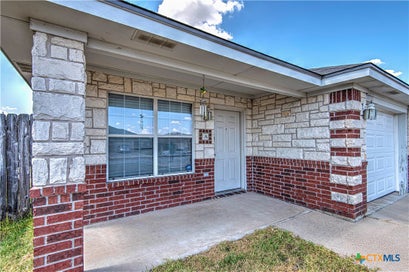
Homes listed by Homevets Realty right now across Killeen, Harker Heights, Copperas Cove, and the greater Fort Hood area. Many of these sellers are open to concessions that fund a mortgage rate buydown — ask us which ones.






Looking for something specific? Try the full map search, see what is just listed, or start from our Fort Hood homes for sale hub.
Mortgage Rate Buydown FAQ
A mortgage rate buydown is money paid up front at closing to lower your interest rate. A temporary buydown lowers the rate for the first one to three years and then it returns to the note rate. A permanent buydown uses discount points to lower the rate for the full loan term. The funds can come from you, the seller, the builder, or a combination.
One point costs 1% of the loan amount — $3,000 on a $300,000 loan. It typically lowers the rate by about 0.25%, though the actual amount varies daily and can range from roughly 0.125% to 0.375%. Always ask the lender for a side-by-side quote with zero, one, and two points so you can compare the real numbers rather than a rule of thumb.
Discount points are optional and buy you a lower rate. An origination fee is the lender's charge for processing the loan and buys you nothing in return. Both appear in Section A of page 2 of your Loan Estimate. Origination fees are negotiable, and on a VA loan the lender's flat fee cannot exceed 1% of the loan amount.
Yes, and it is common. Sellers frequently prefer paying a concession over cutting the price. Limits depend on the loan: VA allows 4% in concessions, FHA and USDA allow 6% of the sales price, and conventional ranges from 3% to 9% depending on your down payment. The concession must be written into the purchase contract.
Usually not. At current pricing the break-even on discount points is roughly five years. If you expect orders or a move before then, you will not recover the cost. A seller-funded temporary mortgage rate buydown is generally the better structure for a short horizon because it costs you nothing and still lowers the early payments.
With a temporary mortgage rate buydown, the funds sit in an escrow account and are released monthly. If the loan is paid off early through a sale or refinance, the unused balance is typically applied to your loan payoff rather than forfeited. With permanent discount points, the money is spent at closing and is not refundable, which is why the break-even calculation matters so much.
Sources and disclaimer. Rate averages are from the Freddie Mac Primary Mortgage Market Survey as of August 27, 2026 (30-year fixed 6.66%, 15-year fixed 5.98%). Definitions of discount points, lender credits, and origination charges follow the Consumer Financial Protection Bureau guidance on comparing loan offers. All payment figures are principal and interest only on a $300,000 loan for illustration; they exclude taxes, insurance, HOA dues, and mortgage insurance. Homevets Realty LLC is a licensed Texas real estate brokerage, not a mortgage lender, and this page is educational information rather than lending, tax, or legal advice. Rates, pricing, and concession limits change — confirm every figure with a licensed loan originator and your tax professional before making a decision. More local guidance is available in our Killeen real estate insights and on our about page.